Choose the evening before choosing the box
Player count, available time and the kind of conversation people want are a better starting point than a long shortlist.
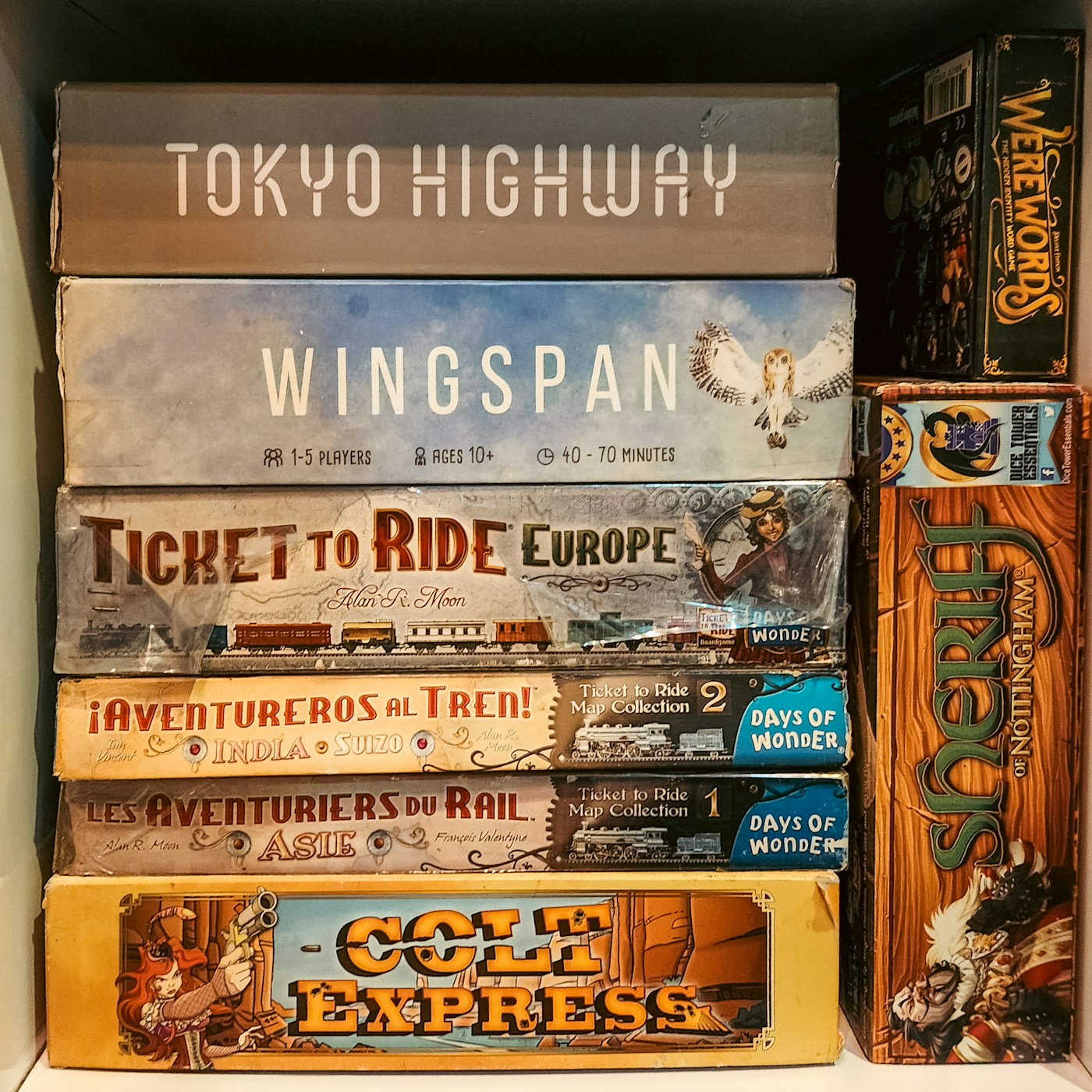
A shelf can offer dozens of good games and still make choosing difficult. The problem is often that the group is comparing boxes before agreeing on the evening. A few practical questions can narrow the choice without requiring anyone to know a catalogue of game mechanisms.
Ask what is actually available
Confirm the likely player count and the time people need to leave. Include setup, teaching and packing away when thinking about the available window. The duration printed on a box can be a useful reference, but it is not a promise about a particular group learning the game for the first time.
Check who already knows the candidate games and who is willing to explain one. A game can be easy to play after learning yet still require a substantial introduction. Give that explanation a place in the evening instead of assuming it will happen outside the allotted time.
Describe the mood plainly
Ask whether people want close attention, relaxed conversation or something between the two. Discuss direct competition, shared objectives and negotiation in ordinary language. The aim is not to assign personalities or insist that a player always likes one kind of game. Preferences can change with the evening.
Make room for practical needs. Small text, colour-dependent information, reaching across a large board or holding many cards can affect access. Ask what would help, consult the components together and avoid requiring someone to justify a preference in front of the group.
Offer a real choice
Present two or three suitable options with the same short description for each: what players do, what kind of interaction to expect and how much teaching is involved. Avoid introducing one option enthusiastically while treating the others as homework. If nobody wants the options, return to the needs rather than campaigning for a favourite.
Agree how the final decision will be made. A quick vote, a rotating chooser or a shared shortlist can all work when everyone knows the arrangement. Keep the process shorter than the game you are trying to begin.
Have a smaller ending available
If the main session finishes early, let stopping be a complete option. A short second game should be an invitation, not a requirement to stay. If the group wants one, choose from a prepared small selection rather than restarting the entire search.
Afterwards, note what matched the evening and what did not. Record the context alongside the title: new players, a late start or a particularly talkative table. That small record helps future choices without turning one session into a permanent verdict on a game or a person. The best shortlist is the one that gets this group comfortably to the table.